Cumbrian folk melody archive, including scores

Updated: Jun 9

Throughout my compositional life I have consistently identified 'Cumbrian Folk Music' as a key influence in my writing. I thought it might therefore be useful to create an archive of melodies to show what I mean by this.
Introduction
'Cumbrian' folk music is a rather nebulous genre: the music from this area can (and should) be considered part of a wider folk music tradition; sharing much particularly with Northumberland and the Scottish Borders (Cumbria itself didn't exist in its modern form until the late 20th century).
The best way to understand what melodies were widely performed in the area is to study locally-collated music manuscripts. Looking at these, the strong cross-border and cross-county influences become clear.
Within these manuscripts, it is possible to infer that certain melodies have a specific Cumbrian connection (e.g. if the title features Cumbrian place names, notable local people, or groups). I have listed some of these below complete with transcribed scores, notes and links to view the original manuscripts: click the arrow to see the score.
Alstone Slow March
Source: From the Harrison Manuscript, Score sourced here
Composer: Mr B Hodgson - unusually this melody has a named composer.
Notes: Alston (spelled Alstone in the source material) is a small market town in Eastern Cumbria. Structurally, this is similar to many others on this list with two repeating musical sections.

Canny Cummerlin
Score: From the Rook Manuscript, Score sourced here
Notes: Canny (shrewd), Cummerlin (Cumberland). This melody, like many others, features modal shifts.

Ennerdale Bridge
Score: From the Rook Manuscript, Score sourced here
Notes: Ennerdale Bridge is a village in Western Cumbria. Whilst marked as 6/8 in the original manuscript (copied here), it has an unusual variable meter.

East Curthwaite
Score: From the Rook Manuscript, Score sourced here
Notes: East Curthwaite is a village located South-West of Carlisle.

John Peel
Score: From the Rook Manuscript, Score sourced here
Composer: Noted in the score as 'from memory'.
Notes: John Peel was a notable figure in Cumbria in the 19th century. This melody is really a Cumbrian variation of a Scottish tune 'Where wad Bonnie Annie Lie?'. The better known melody would be later composed by William Metcalfe.

Keswick Jigg
Score: From the Rook Manuscript, Score sourced here
Notes: Keswick is a town in the Northern Lake District. The final two quavers in bar five have been copied as in the original score, but it may be a copying mistake on the copyist's part - all other phrases end with two crotchets. This is one of the longer melodies in this list, with four repeating phrases rather than the more usual two.

Kendal Lilt
Score: From the Rook Manuscript, Score sourced here
Notes: Kendal is a market town in the South of Cumbria.

Kendal Gills
Score: From the Rook Manuscript, Score sourced here
Notes: Kendal is a market town in the South of Cumbria.

Lads of Dawston
Score: From the Rook Manuscript, Score sourced here
Notes: Dalston (spelled Dawston in the original manuscript) is a village just South of Carlisle.

New Road to Alston
Score: From the Yarker 1797 Manuscript, Score sourced here
Notes: Alston is a small market town in Eastern Cumbria.

Noble Squire Dacre comes over the Border
Score: From an anonymous tune book. Score sourced here
Royal Cumberland Bugle Slow March
Score: From the Rook Manuscript, Score sourced here

The Cumberland Militia Quick Step
Score: From the Harrison Manuscript, Score sourced here
Notes: The Cumberland Militia was founded in 1760.

The Cumberland Rangers Troop
Score: From the Harrison Manuscript, Score sourced here
Notes: The Cumberland Rangers was a cavalry troop founded in 1803.

The Lowther Hunt
Score: From an anonymous tunebook. Score sourced here
The Sillar Crown
Score: From the Rook Manuscript, Score sourced here
Notes: The title 'The Sillar Crown' refer to lyrics written by the Cumbrian writer Susannah Blamire (1747-1794), one of the first poets to write in Cumbrian dialect. The writer of the melody is anonymous.

Lyrics:
And ye shall walk in silk attire,
And siller hae to spare,
Gin ye’ll consent to be his bride,
Nor think o’ Donald mair.
O wha wad buy a silken goun
Wi’ a poor broken heart!
Or what’s to me a siller croun,
Gin frae my love I part!
The mind wha’s every wish is pure
Far dearer is to me;
And ere I’m forc’d to break my faith,
I’ll lay me down an’ dee!
For I hae pledg’d my virgin troth
Brave Donald’s fate to share;
And he has gi’en to me his heart,
Wi’ a’ its virtues rare.
His gentle manners wan my heart,
He gratefu’ took the gift;
Could I but think to seek it back,
It wad be waur than theft!
For langest life can ne’er repay
The love he bears to me;
And ere I’m forc’d to break my troth,
I’ll lay me doun an’ dee.
Trip to Netherby
Score: From the Rook Manuscript, Score sourced here
Notes: Netherby is a village in the far north of Cumbria. Cumbrian authorship of this melody is less sure than others on this list, as the 'trip to' in the title suggests that this was written by someone from elsewhere.
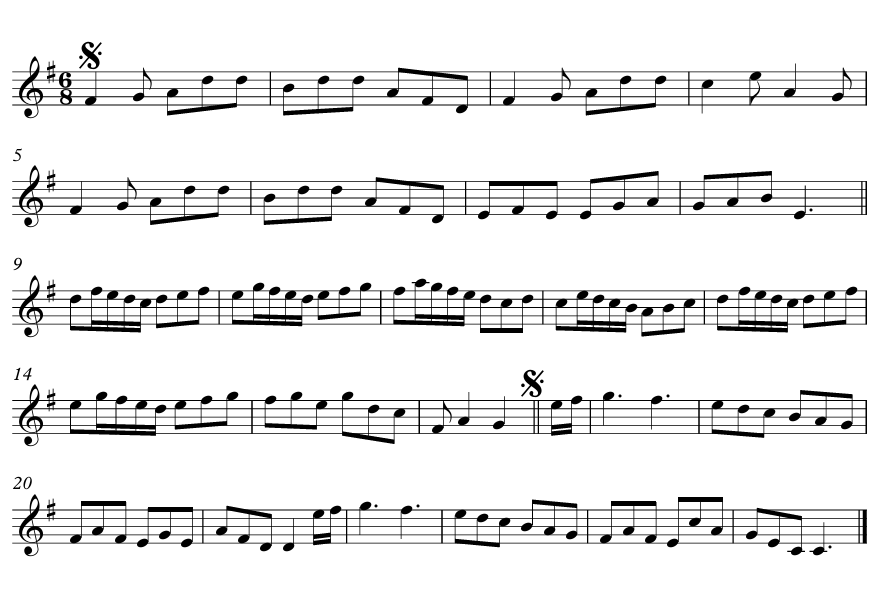
Trip to the Lakes
Score: From an anonymous tunebook. Score sourced here
Upper Denton
Score: From the Rook Manuscript, Score sourced here
Notes: Upper Denton is a small village in North Cumbria, close to Hadrian's Wall.

Squire Dacres

Weatherall's Quick Step
Score: From the Harrison Manuscript, Score sourced here
Whitehaven Volunteers
Score: From the Rook Manuscript, Score sourced here
Notes: Whitehaven is a town on the Cumbrian Coast.

Workington Races
Score: From the Rook Manuscript, Score sourced here
Notes: Workington is a town on the Cumbrian Coast.

PWR 2026


Comments